Abstract
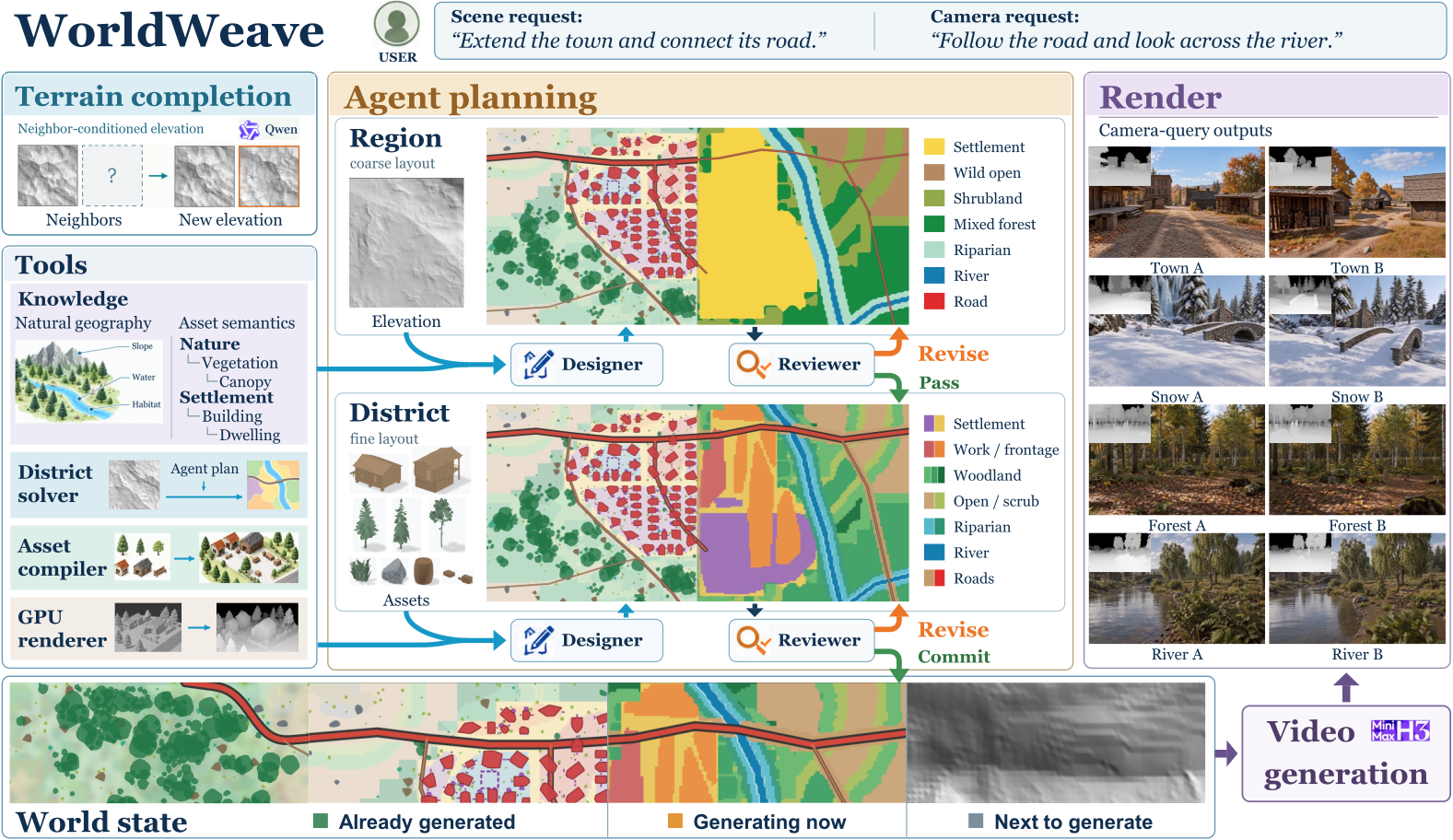
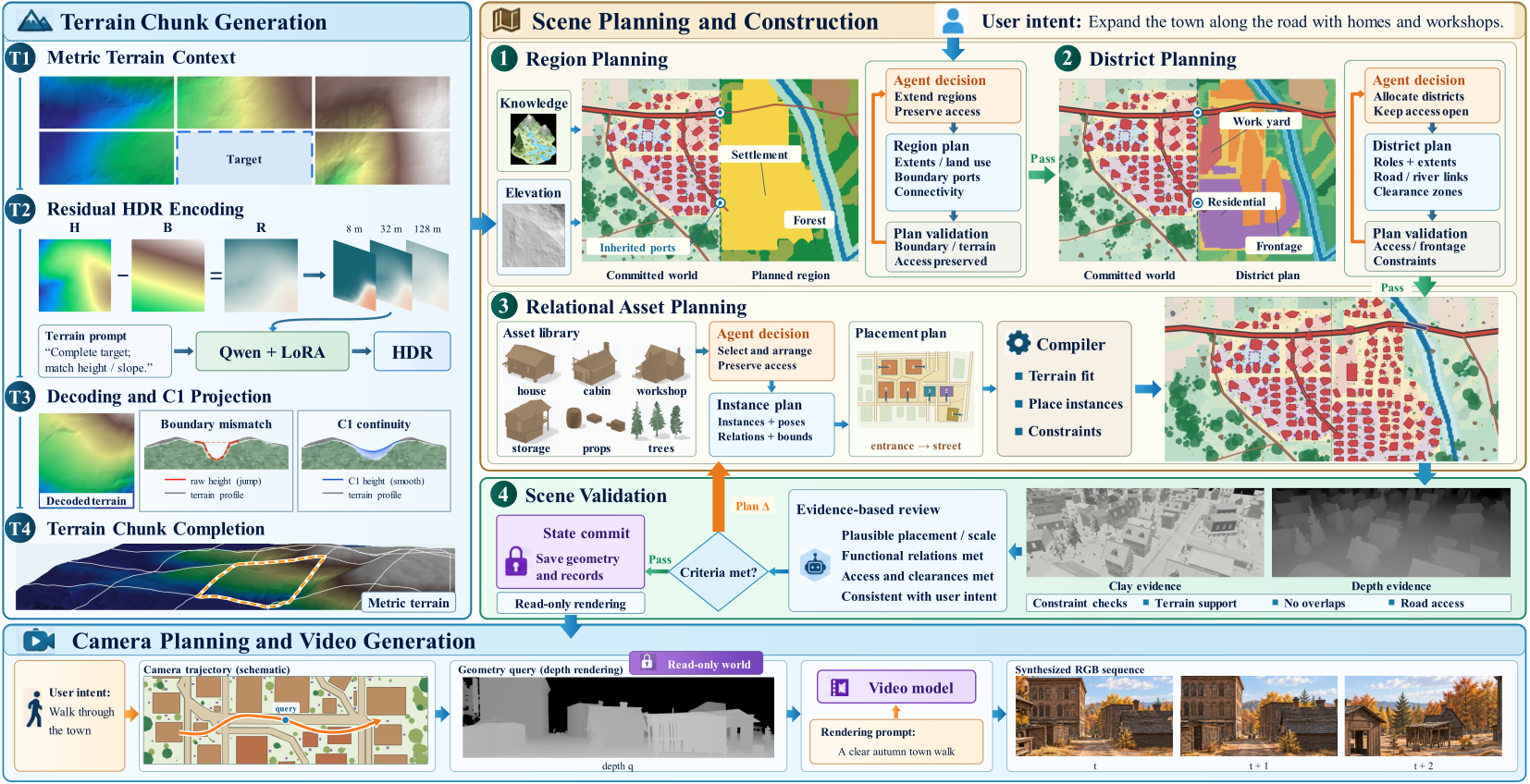
Despite rapid progress, world models still lack explicit, persistent structural memory, making it difficult to preserve consistent world structure during continual scene expansion and cross-view revisits. To address this limitation, we present WorldWeave, a world generation framework that decouples world-state maintenance from visual rendering. Specifically, WorldWeave combines continual elevation-map generation with agent-guided scene organization and stitching to build an expandable explicit 3D world that incrementally extends structural memory while preserving existing structure. First, its terrain module uses diffusion-based image outpainting to generate continuous metric elevation maps under neighborhood conditioning and boundary constraints. Next, an agent integrates user intent, terrain evidence, and cross-region connectivity constraints to construct scenes through hierarchical semantic planning, deterministic geometry compilation, and local revision. Finally, during visual generation, planned camera trajectories query world geometry through a read-only interface, producing depth sequences that guide video synthesis without writing the generated results back into the world state. As a result, structural memory remains independent of short-window video generation, enabling continual expansion without predefined map boundaries and providing a consistent geometric basis for observations across trajectories and repeated visits.
Video demonstration
Video demonstration
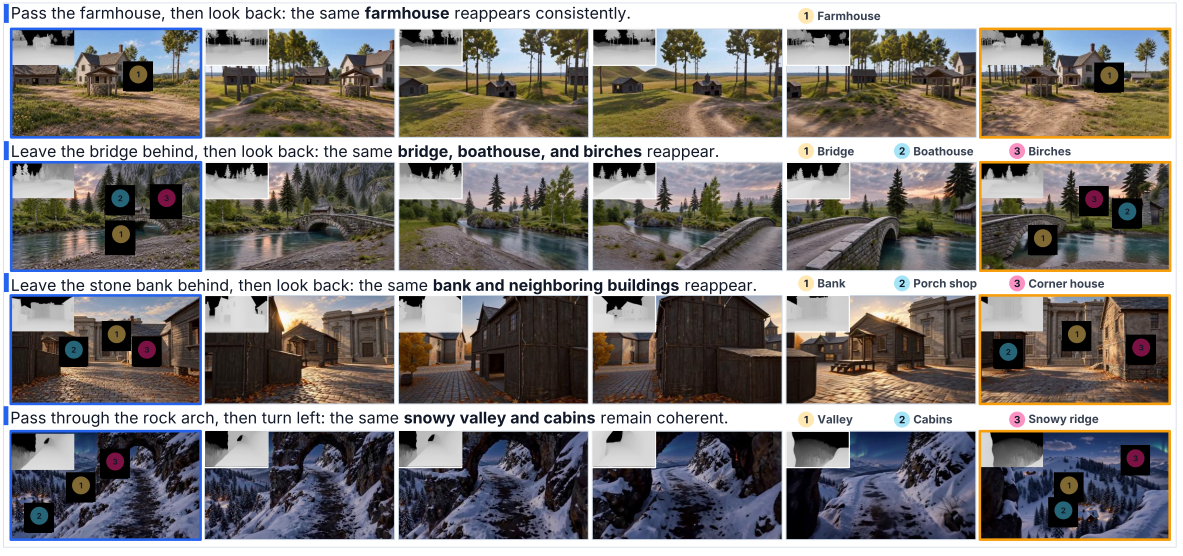
Coming soonExplore. Turn away. Revisit.
Shared geometry across changing observations.
From persistent world to video
Terrain completion · Agent planning · Read-only rendering
Quantitative results
Visual quality, memory, camera control and structural consistency.
| Method | Visual quality | Memory & camera control | Structural consistency | |||||
|---|---|---|---|---|---|---|---|---|
| Imaging quality ↑ | Aesthetic quality ↑ | Structural memory ↑ | Camera compliance ↑ | MN-MS ↑ | MC-GeCo ↓ | MC-MEt3R ↓ | MC-GeoCon ↓ | |
| SANA-WM | 0.739 | 0.619 | 0.328 | 55.5 | 0.973 | 0.113 | 0.203 | 0.189 |
| Zing | 0.763 | 0.685 | 0.989 | 55.8 | 0.974 | 0.0698 | 0.129 | 0.142 |
| SolarWM-5B | 0.755 | 0.604 | 0.370 | 54.7 | 0.956 | 0.0786 | 0.166 | 0.217 |
| AlayaWorld | 0.784 | 0.641 | 1.51 | 56.4 | 0.896 | 0.926 | 0.239 | 0.295 |
| EVOKE-Turbo | 0.784 | 0.718 | 1.12 | 61.6 | 0.961 | 0.105 | 0.182 | 0.249 |
| Echo-WM | 0.791 | 0.655 | 2.21 | 63.5 | 0.968 | 0.0604 | 0.135 | 0.135 |
| Seedance 2.0 | 0.717 | 0.617 | 2.14 | 69.8 | 0.980 | 0.101 | 0.170 | 0.307 |
| Wan3.0 | 0.786 | 0.702 | 1.63 | 59.1 | 0.938 | 0.146 | 0.184 | 0.131 |
| Kling 3.0 | 0.739 | 0.588 | 2.09 | 59.3 | 0.978 | 0.0745 | 0.155 | 0.163 |
| MiniMax-H3 (Base) | 0.725 | 0.617 | 0.438 | 50.8 | 0.979 | 0.0633 | 0.140 | 0.178 |
| WorldWeave | 0.781 | 0.704 | 2.30 (+426.7%) | 72.3 (+42.2%) | 0.981 | 0.0573 | 0.122 | 0.121 (-32.2%) |
The first six baselines are open-source world models; the remaining baselines are video models. Bold and underline indicate best and second-best scores. Highlighted gains are relative to MiniMax-H3 (Base). Evaluation covers 120 tasks, with structural memory measured on the common 48 applicable tasks.